



Pain under the left shoulder blade from the back is a fairly common pathology, especially in the older age group.
Although cases of the disease are not uncommon at a young age, sports injuries, incorrect posture, and hereditary factors can also cause the condition in question.
If your back pain is prolonged and severe and does not go away over time, this is an important reason to see your doctor.
Untimely assistance for this disease can lead to irreversible consequences and complications.
Chest anatomy:
Spinal column: it is made up of the vertebrae and the spinal cord.It has extremely important functions: support, shock absorption and protection of the spinal cord.
The scapula, both left and right, belongs to the upper girdle bones of the limbs.This is a flat bone that is shaped like a triangle.
Both on the outer and inner surface, the scapula has a large number of depressions and fossae - these are the places of attachment of ligaments and muscles.
It consists of a spongy substance, which is especially durable, which is explained by the constant loads on the waist of the upper extremities.
The clavicle is the bone that provides the joint between the shoulder blade and the breastbone.
The heart is an organ that is essentially a muscular bag that ensures normal circulatory function in the body.
The lungs are paired organs located in the chest that are responsible for breathing and gas exchange.
The esophagus and stomach are the digestive organs.
The ribs are flat bones that are attached to the spine behind and to the sternum in front.They have a protective function for the chest.
Causes of pain under the left shoulder blade from the back.

From the above list, it becomes clear that the causes of pain in the back of the shoulder blade or in the back of the back may be hidden in diseases of the internal organs or the musculoskeletal system, most often of which the patient was not even aware.
It has been observed that in some pathologies this discomfort can persist even while the person is at rest.However, this symptom does not always indicate the presence of a complex back pathology.
Among the many pathological conditions accompanied by such a symptom are serious cardiac, gastrointestinal and neurological diseases.
The main causes of back pain and shoulder blade pain can be divided into 5 main pathologies most common among patients:
- Disorders of the musculoskeletal system.
- Acquired and hereditary heart diseases.
- Pathology of the bronchi, pleura or the lungs themselves.
- Acute or chronic diseases of the gastrointestinal tract.
- Diseases of the musculoskeletal system, including the scapula.
Musculoskeletal disorders
Diseases of the skeletal system are often accompanied by severe pain.
Aching, severe and unbearable pain in the back of the back and shoulder blades may occur due to the following reasons:

- Cervical osteochondrosis is a process of destruction of bone tissue.In this case, the strongly compressed nerve roots cause, at first, dull, barely noticeable pains, and over time, sharp, stabbing pains under the left shoulder blade or in the adjacent area, as well as in the back.
- Thoracic osteochondrosis is a process that differs from cervical osteochondrosis only in the location of the lesion.With this osteochondrosis, the cervical roots of the spinal nerves will not be affected, but the thoracic ones.The pain may be accompanied by periodic dizziness, numbness of the upper extremities, and back pain in the back becomes more intense in the morning.
- Damage to the intercostal nerves is the most common cause of pain.Patients notice endless burning pain on the side of the left shoulder blade or on the left side of the spine.If you do not provide the patient with adequate assistance, the pain will become stabbing and sharp.
- Malignant neoplasms or metastasis of tumors located on the scapula itself.Causes severe pain.
- Scapular rib syndrome is characterized by persistent, aching pain in the back, often radiating to the arm.
- Osteomyelitis.
- Scapular crunch: in this pathology, the pain in the back is not very pronounced, only during the movement of the shoulder joint are crepitations (crunking) heard.
- Injuries and constant stress on both the back and the spine.
- Pregnancy, especially in the later stages: pains of various types are explained by the constant tension on the back due to the increase in size of the fetus.
- Tuberculosis of the bones.
- Osteophyte and hernia.Depending on the location of the outbreak and the stage of the disease, due to the constant compression of blood vessels and thus disruption of nerve nutrition, they can also cause severe back pain of a different nature: burning, sharp and aching.
- Arthritis of the shoulder joint affecting the scapula is accompanied not only by severe back pain, worse at night, but also by limited mobility of the joint and myospasm.
- Psychosomatic factors.Stress and constant emotional tension can also cause sharp, stabbing, paroxysmal back pain.
Acquired and hereditary heart diseases.
The left scapula and interscapular region may bother patients due to cardiac disorders.The following table shows the causes of pain and its nature.
| Angiosis | Serious alteration of blood circulation in the heart. | Acute pain in the back of the back that radiates to the left scapula, interscapular area, lower jaw, left arm.Often these symptoms are accompanied by difficulty breathing, as a result of which the patient begins to panic due to fear of death. |
| aortic aneurysm | Dissection of the walls of the thoracic aorta. | The pain in the chest recedes, to the area of the left shoulder blade, the back or between the shoulder blades and gradually descends to the lower back. |
| Endocarditis, myocarditis, pericarditis. | Inflammation of bacterial, viral or parasitic etiology. | Pain syndrome that increases with the disease. |
| heart attack | Necrosis of the heart muscle. | This pathology can radiate not only to the left shoulder blade and back, but also to the left arm, neck and abdomen.The pain intensity is extremely high. |
| angina pectoris | Pain and discomfort in the chest area. | The most pronounced pain syndrome may not be observed.Patients complain of tingling and burning in the left shoulder blade area or left back. |
Pathologies of the bronchi, pleura or the lungs themselves.
Often pain in the left shoulder blade is caused by pathological processes that occur in the lungs.These diseases are mainly of viral or bacterial etiology.
Some of them are described below:
Pneumonia: Patients report pain when coughing, sneezing, and when the process progresses, including when inhaling.Patients usually adopt a forced position: lying down, with the headboard raised or simply lying on the healthy side.
In pneumonia, pain in the region of the scapula and back is not the most important clinical sign.These patients experience mild fever: 37 to 38 ° C, shortness of breath, dryness at first and then with sputum secretion and cough.
In particularly advanced cases, there may be blood and pus in the discharge from the lungs.
Bronchitis is especially accompanied by a frequent, barking cough.Pain in the area of the left shoulder blade or in the back can arise precisely because of this.
Pleurisy - most often due to this pathology, pain syndrome develops in the left shoulder blade and back in the interscapular area.
The pain in the back and shoulder blade is dull and dull at first, but then, as the process progresses, it becomes more intense.
With this disease, early diagnosis is important: an X-ray of the chest circumference.
In the absence of pathologies in the lungs, pleura and bronchi, the patient is urgently recommended to consult a cardiologist to rule out myocardial infarction.
Tuberculosis of the thoracic and bronchial lymph nodes.
This pathology can be accompanied by subsequent pain, especially in the terminal stages.
Acute or chronic diseases of the gastrointestinal tract.
Often, pain in the area of the left shoulder blade, back or interscapular space is an important clinical symptom of diseases of the digestive system.It is important to know what pathologies can be accompanied by pain in the left shoulder blade.
Perforated stomach ulcer
A perforated ulcer of the stomach, or more precisely, its upper sections, in addition to stabbing abdominal pain, fever and vomiting, may be accompanied by sharp, aching pain in the area of the left shoulder blade.
acute pancreatitis
Constant pain in the waist in the epigastric region and disorders of the digestive system: vomiting, diarrhea, accompanied by pain in the left shoulder blade of the back in the lumbar region.
Injury or rupture of the spleen
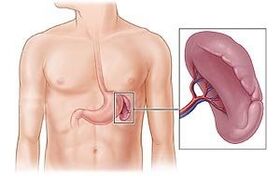
Injuries to the spleen are often invisible due to the uncharacteristic signs that appear when the organ is damaged.Symptoms may be hidden, without severe pain.
When the splenic parenchyma ruptures, a hematoma forms in the subcapsular space, which is accompanied by a dull pain that increases as the hematoma grows under the left shoulder blade and behind the back, on the left side of the ribs.
Attention!The conditions described above require immediate diagnosis and, in some cases, surgical intervention.
Diseases of the musculoskeletal system, including the scapula.
In this case, any pathological process affecting the shoulder joint will be accompanied by pain under the left shoulder blade, which intensifies with movement of the arm.
Acute pain can cause:
- Sudden movements.
- Injuries: fractures, dislocations of the scapula.The nature of the pain can be sharp or dull.It is necessary to use analgesics to relieve pain.
- Tuberculosis of the scapula: the pain increases as the disease progresses.
- Gunshot wounds to the scapula.The pain can persist for a long time even after the integrity of the scapula has been restored.
- Bursitis is an inflammation of the surface of the shoulder joint.
Diagnosis of diseases accompanied by pain in the left shoulder blade.
If you complain of pain in the left shoulder blade area, it is imperative to consult a doctor in a timely manner to make a diagnosis and prescribe the correct treatment.
To make an accurate diagnosis, the following research methods are required:
- Computed tomography.
- Radiography in different projections depending on the location of the pathological process.Additionally, in case of lung disease, a chest x-ray is required to exclude pleurisy, tuberculosis and pneumonia.
- MRI - its layer-by-layer image will allow you to further study the ongoing pathological process.The outcome of the treatment will largely depend on your results.
- To exclude heart attacks, patients are prescribed an ECG, echocardiogram, ultrasound of the heart and a blood test to check the presence of heart attack markers in the blood.
- Ultrasound of internal organs will help confirm or exclude diseases of the parenchymal organs, which may present pain in the area of the left shoulder blade and back.
- General and biochemical blood analysis, measurement of pulse, pressure.
Basic rules of therapy.
If pain in the left shoulder blade noticeably makes breathing difficult, this is an important reason to consult a therapist.
Self-administration of medications can only worsen the condition.
It is important to diagnose the cause and establish the origin of the pain.In case of correct diagnosis and proper treatment, the pain attack will be stopped.
When self-medicating, cases of repeated pain syndrome often occur, which disrupts the patient's quality of life.
Medications should be taken exclusively under the supervision of a specialist;In addition, patients are prescribed a regimen and diet appropriate to the diagnosis.